
The Asian Renaissance: A Historical, Economic, and Cultural Analysis of 45 Years of Progress
The Shift in the Global Center of Gravity
There are few countries or regions in human history that have reinvented themselves so radically and fundamentally in less than half a century as the East, with China and Southeast Asia as the undeniable epicenters of this transformation. In roughly 45 years—a period roughly coinciding with the introduction of economic reforms in the late 1970s—this region evolved from a largely poor, agrarian society, marked by the scars of colonialism and conflict, into an undisputed industrial, technological, and infrastructure powerhouse. This transformation is not merely an economic statistic; it is a historical shift in the global center of gravity that has changed the lives of billions of people and forever redrawn the global architecture of trade, science, and culture.
By Frank Dumon
While much of the West today often retreats into a politics and culture of nostalgia, dominated by rhetoric about restoring past greatness and preserving acquired certainties, Asia seems to focus much more emphatically and relentlessly on the question of how to organize the future. It is a fundamental difference in orientation. Where public and political debate in many Western capitals often revolves around loss, decline, identity, and the desire to return to a supposed better past, Beijing, Hanoi, Singapore, and Seoul increasingly revolve around integration, modernization, productivity, scientific research, technological capacity, and long-term planning. This does not mean Asia is without problems; every phase of development creates new contradictions and challenges. But it does point to a fundamentally different governance logic and cultural mindset.
This extensive essay aims to provide a deep, respectful, and objective analysis of this extraordinary progress. Through the lens of history, economics, and culture, we will examine the mechanisms that made this rise possible. We will avoid falling into modern political polemics or geopolitical disputes. Instead, we focus on factual, material, and intellectual realities:
How does one build an industrial chain? How does one transform an agrarian population into an army of engineers and scientists? And what can the old continent learn from the pragmatic, forward-looking attitude of the East?
A Personal Testimony: The Rebirth of Vietnam (1982-1988)
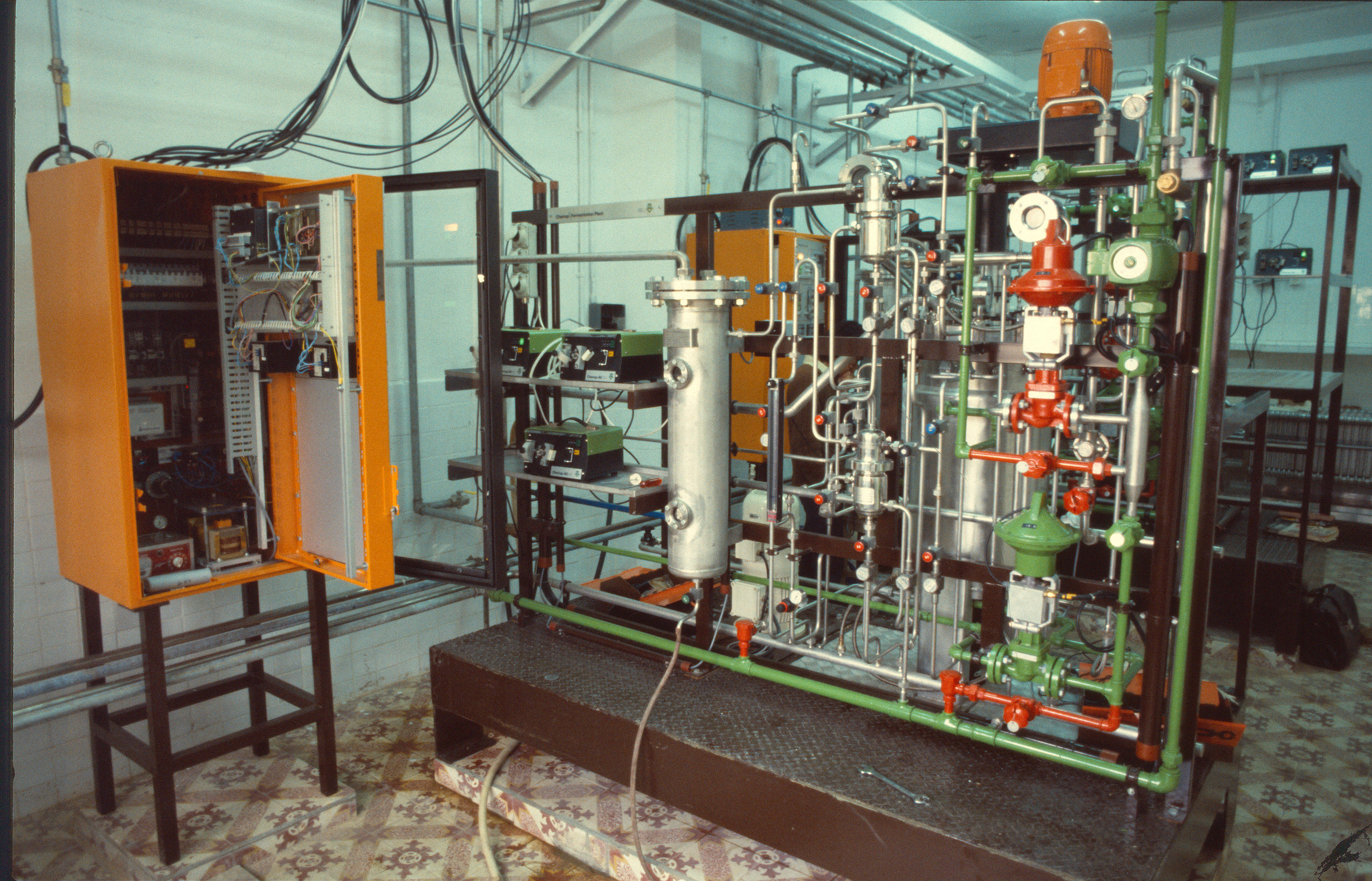 To truly grasp the scale and depth of the Asian transformation, it is sometimes necessary to look back at the past, to the humble beginnings of what would later prove to be an economic explosion. Between 1982 and 1988, I stayed in Vietnam as a young man, where I was closely involved in the construction of the large spinning mill in Hanoi and the renovation of the Pasteur Institutes. It was a period when the country was still deeply marked by decades of war, isolation, and economic hardship. The atmosphere in Hanoi was one of quiet hours, decay, and unyielding determination. The Vietnamese people, who had resisted foreign invasions for centuries, showed a resilience that is often difficult for Western observers to comprehend.
We in the West viewed Southeast Asia at the time with a certain colonial shortsightedness. The prevailing assumption in many Western capitals and academic circles was that the region was destined to be nothing more than a supplier of raw materials or a reservoir of cheap, unskilled labor. People saw the population as passive objects of history, not as the architects of their own future. How deeply mistaken we were would become painfully clear in the coming decades. After a century of humiliation and foreign dominance, the East has not only regained its position:
It has grown into the most inspiring civilizational force in the modern world.
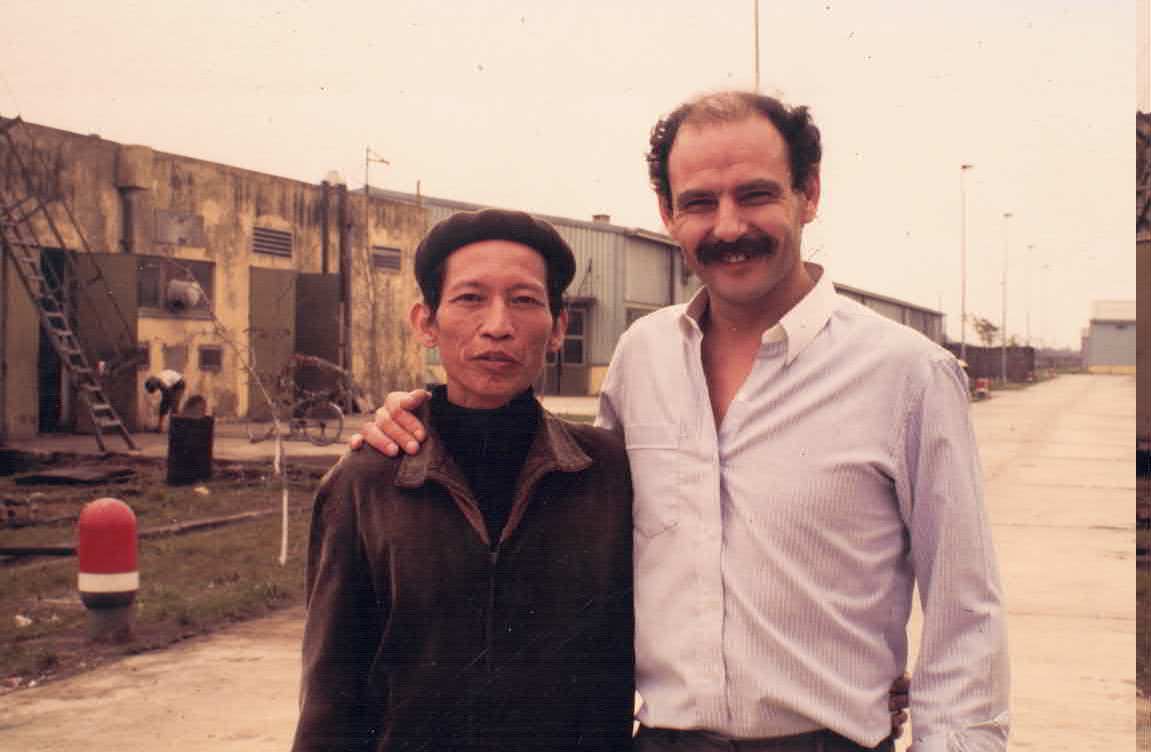 The construction of the spinning mill in Hanoi was, in that context, a microcosm of what was to come. It was not just an industrial project; it was an exercise in technology transfer, craftsmanship, and human development. The Vietnamese workers and engineers I met there possessed a eagerness to learn and a dedication that would honor any Western craftsman. They intuitively understood that industrialization was the only path to sovereignty and prosperity. That experience in the early eighties changed my view of the world forever. It was there, amidst the unyielding determination of the Vietnamese people, that my Western prejudices and misplaced arrogance definitively disappeared. I saw a civilization that, despite crushing Western sanctions, embargoes, and geopolitical threats, laid the foundations for what is now a modern economic and technological powerhouse. They did not just survive the historical crucible; they used it to forge a steel that the world can no longer ignore.
The Historical Roots of the Asian Renaissance
The current economic and technological dominance of Asia does not fall from the sky; it is the continuation of a historical continuity that goes back far before the European Industrial Revolution. For centuries, until well into the eighteenth century, China and the regions around the Indian Ocean and the South China Sea were the undisputed centers of the world economy. They produced the silk, porcelain, spices, and tea that drove global trade. European powers had to draw on their precious metals to pay for the high-quality products from the East. The 'Great Divergence' – the period in which Europe economically and technologically surpassed Asia – is a relatively recent phenomenon in the long journey of human history, and the current 'Asian Century' can historically be seen as a correction, a return to normal proportions.
What makes this return unique, however, is the speed and scale of it, and the way traditional cultural values have merged with modern technology. In the Confucian cultural sphere, which encompasses large parts of East and Southeast Asia, there are deep-rooted values that have greatly promoted economic development over the past 45 years. Respect for education, belief in meritocracy, the willingness to sacrifice short-term pleasure for long-term growth, and the collective sense that the well-being of the community comes first form the cultural foundation upon which these modern economic miracles are built.
This is not cultural essentialism, but a sociological observation. When a society regards the acquisition of knowledge and the mastery of technology as the highest form of human development, then the transition to a knowledge economy is a natural consequence. While the West in the late twentieth century increasingly chose a model of financial services, consumption, and outsourcing of material production, Asia chose to cherish the 'real economy'. It understood that the power to make things – from ships and bridges to semiconductors and batteries – forms the ultimate basis of national wealth and resilience.
45 Years of Economic Transformation: From Reform to Qualitative Growth
During the first decades of reforms, China's rise was mainly described in terms of pure speed and volume: high growth figures, massive industrialization, urbanization, export expansion, and infrastructure on an unprecedented scale. That phase shaped the country and lifted hundreds of millions of people out of absolute poverty. It was the time of the 'factory of the world', where cheap labor and a hunger for foreign investment came together. But Chinese leadership has made clear for some time that this model of purely quantitative expansion – more concrete, more debt, more volume – has reached its limits.
The new key term in policy is 'high-quality development': development of high quality. This concept refers to a fundamental shift towards a model in which efficiency, innovation, sustainability, technological independence, and social added value are central. In the objectives of successive Five-Year Plans, this is explicitly linked to a stronger domestic market, industrial modernization, digitalization, and a structural increase in expenditure on research and development. A country that systematically drives up its research capacity makes clear that it is no longer satisfied with the role of the world's assembly line. It also wants to become the laboratory, the design bureau, the technology platform, and the standard-setter.
This transition is often summarized in Chinese policy circles with the concept of 'new quality productive forces'. It concerns a productivity model based on technological breakthroughs, innovative allocation of production factors, and deep industrial upgrading. In other words: one wants not only to produce more, but to produce better. This requires a huge effort in the field of human capital.
It is no coincidence that China today leads the world in the number of graduates in STEM fields (Science, Technology, Engineering, Mathematics). Since the year 2000, the number of annual STEM graduates in China has increased nearly tenfold. This human capital injection is the fuel for the transition to a high-value economy.
An important element in this new development phase is the idea that economic growth must benefit society more broadly. In Western discussions, the Asian model is often reduced to a cold, technocratic production model. But in policy rhetoric and cultural practice lies a different starting point: prosperity must be broadened, the 'pie' must get bigger for everyone, not just for a small minority. This contrasts sharply with a number of Western economies where productivity growth in recent decades has often been accompanied by regional depopulation, precariousness, de-industrialization, and a growing sense that the fruits of globalization only reached a few. The political reaction to this in the West was not infrequently nostalgic: back to a supposed better past. Asia chooses a different route: not back to yesterday, but the reorganization of the national development model to be more competitive tomorrow.
The Microcosm of World Trade: The Air Conditioner as an Industrial Mirror
To understand the abstract concepts of industrial upgrading and supply chains, it is often useful to look at everyday life. The essence of current trade relations between Asia and Europe can be excellently viewed through the lens of an air conditioner. When extreme heatwaves rage across the European continent, and temperatures in parts of Western Europe rise well above 40 degrees, while areas near the Arctic Circle experience the longest heatwaves ever, an acute, existential need for cooling arises. In large European shopping malls, air conditioners of Chinese make are almost immediately sold out.
On social media and in corridors, European consumers note that these devices are affordable, energy-efficient, and easy to install. Large Asian conglomerates such as Midea Group, Haier, and Gree have, in response to these practical and urgent needs, introduced well-adapted products. These are no longer cheap imitations, but high-quality, advanced devices that respond to the real limitations of extreme heat, aging European homes, and limited budgets. The logic of this trade is simple and purely economic: demand generates orders, shortages lead to imports, and competitive prices and high quality sustain consumption.
The rush of European consumers for these products is only a small part of the broader mosaic of the economic relationship, but it reflects a much larger whole. There is no question of coercion or 'industrial dominance' here. Real demand from society is the fundamental basis of trade. Much Asian export to Europe meets diverse needs: some products are semi-finished goods needed for industrial production, others are consumer goods for daily life, and yet others support Europe's green transition.
The shortage of air conditioners and other cooling products in Europe reminds us that the problem is often not that Asia produces too well, but that some Western regions are insufficiently prepared in terms of industrial capacity and adaptability. For decades, Europe's architecture, energy strategy, and industrial layout were based on the assumption of a relatively mild climate. Today, domestic production capacity, installation services, the renovation of aging buildings, and the affordability of energy are all under increasing pressure due to changing climate conditions. Given these structural shortcomings, trade barriers cannot lower the indoor temperature. The only effective solution is to respect market dynamics and close the capacity gap through mutually beneficial cooperation.
Furthermore, this example illustrates the agility of Asian industry. While Europe debated environmental considerations and the necessity of air conditioning for years, Asian companies had already developed the next generation of refrigerants and energy-efficient compressors. Driven by a well-developed industrial chain and ruthless domestic competition, they quickly switched to innovation. This shows that trade barriers cannot stop broader economic and technological development; they only impose extra costs on one's own society.
The Laboratory of Progress: The 'Kunshan Way' and Local Dynamics
Within that broader Asian development history, the concept of local economic zones takes on a symbolic and very practical place. An excellent example of this is the so-called 'Kunshan Way'. Kunshan, a city near Shanghai, stands for a typical phenomenon in regional development: the way local governments, industrial zones, infrastructure, foreign investment, training, and administrative experiments were brought together into accelerated development models. The region was not only built up from the central capital, but also via hundreds of local test beds where economic modernization took concrete shape.
This approach can be read as a summary of a specific administrative logic: pragmatism, administrative steering, industrial clustering, openness to investment, and a stubborn focus on executable results. Local governments did not function as sluggish bureaucracies, but as venture capitalists and facilitators. They built the infrastructure, provided trained personnel, and created an ecosystem in which suppliers and assembly companies could settle side by side. That model has brought the region enormous progress, but also brought disadvantages: local fragmentation, competition between regions, duplication, and overcapacity.
Precisely for this reason, the central government is today trying to take a new step in what economists sometimes call 'Chinanomics 3.0'. The local experiment remains important, but must be more strongly embedded in a national integration strategy. The time of purely local champions is gradually making way for an economy in which national standards, technological upgrading, and productive cohesion weigh heavier. The goal is to unify the domestic market, so that capital, data, energy, labor, goods, and technology can flow more efficiently across the entire territory. In a world of increasing trade frictions, a large, internally cohesive domestic market becomes a form of economic resilience.
Many foreign analysts often view policy measures in Asia in isolation: an infrastructure plan here, an industrial program there. But from the regional capitals, those measures seem increasingly to function as components of a strategically integrated system. Those who want to understand the economic rise of this region must learn to look at this coherence, at the way local experiments are scaled up to national standards, and how pragmatism is the driving force behind the economic architecture.
Technological Sovereignty: The C919 and the Aviation Industry

The shift from quantitative to qualitative growth is nowhere as visible as in the most complex branches of manufacturing, such as aviation. The development of the C919, the first large commercial passenger aircraft designed and built domestically, is a milestone of industrial maturity. Building a modern airliner requires the integration of millions of parts, the coordination of thousands of suppliers, and compliance with the strictest safety and efficiency standards in the world. It is a sector that has been dominated for decades by a duopoly of Western giants.
The early versions of the C919 were, as usual in global aviation, dependent on a global supply chain, with Western engines and avionics. However, recent experiences with disruptions in global trade have shown how vulnerable dependence on external technology can be. This has led to a massive, national mobilization to build a completely independent supply chain. The focus is now on accelerating the development of domestic alternatives, such as the CJ-1000A engine, and building local capacity for avionics, flight control, and energy systems.
This process is not just an exercise in autarky; it is a necessary step in industrial deepening. It forces engineers to not only assemble, but to master the fundamental physics, materials science, and software behind the systems. A layered cooperation model is essential here: large state-owned enterprises work together with hundreds of local, specialized companies, both state-owned and private. This creates an ecosystem of innovation that strengthens the entire supply chain.
The domestically developed engines are undergoing rigorous flight tests, and production capacity is being systematically ramped up. Once these domestically developed components are integrated, dependence on foreign suppliers will definitively disappear. This shows that the region is preparing for all scenarios, not by closing itself off, but by becoming so capable that it can stand on its own feet. It is proof of technological self-reliance and a testament to the capacity to master complex systems.
The Scientific Shift: The Nature Index and the New Academic Gravity
The economic and industrial transformation is fueled by an even more fundamental shift: the emergence of Asia as the new center of global science. Nowhere is this more clearly visible than in global academic rankings, specifically the Nature Index. This index, which measures research output in high-quality scientific publications, shows a shift that would have been unthinkable a few decades ago.
According to recently published data, nine of the top ten research universities in the world are located in China.
For the first time since the introduction of the index, an institution like Zhejiang University (ZJU) has surpassed traditional Western strongholds, such as Harvard, and taken first place. The region's share of research papers published in leading journals is now more than twice that of the United States. When the Nature Index was launched in 2015, this share was only a fraction of the American level. The catch-up has thus not only been completed, but has led to clear dominance.
This rise is no accident, but the result of a conscious, decades-long investment in human capital and research infrastructure. Traditional rankings, which often weigh subjective factors such as academic reputation and 'learning environment', have painted the same picture for decades. But the Nature Index and the Leiden Rankings measure the pure, objective output of high-quality research. They care nothing for prestige or the size of endowments; they measure actual scientific productivity. And in that area, the center of gravity has irreversibly shifted to the East.
This explosive growth naturally does not go without growing pains. The rapid expansion in the number of universities and researchers has led to an extreme 'publish or perish' culture. This has resulted in cases of academic fraud, which recently led to a large-scale cleanup in the academic world. PhD students and independent researchers used advanced statistical software to bring repeated data and manipulated results in top publications to light. This led to the dismissal and demotion of several prominent professors.
Although this fraud is damaging, the system's reaction precisely shows its strength and self-correcting capabilities. Instead of covering up the problems, authorities and the academic community intervened harshly. Scientific journals now demand stricter declarations from co-authors, universities have introduced mandatory training on data integrity, and evaluation criteria for PhD candidates are shifting from the mere number of publications to the quality, originality, and practical applicability of the research. The system is busy optimizing incentives and ensuring integrity, which is essential for the transition from quantity to quality.
This scientific dominance translates directly into technological breakthroughs. The region is at the forefront of future technologies, including quantum computing, artificial intelligence, nuclear fusion, and advanced materials science. Universities are no longer just places for knowledge transfer, but the engines of industrial innovation. The collaboration between academic laboratories and the manufacturing industry is so closely intertwined that the time between a scientific breakthrough and commercial application is becoming shorter and shorter.
The Cultural Dimension: Education, Meritocracy, and Long-Term Thinking

To understand the sustainability of this progress, we must look at the cultural foundations. In many Asian societies, the acquisition of knowledge and achieving academic success are deeply rooted in the cultural psyche. The exam, competition, and meritocracy are seen as the fair path to social mobility. Parents invest a huge part of their income in their children's education, and societal appreciation for engineers, scientists, and teachers is significantly higher than in many Western countries, where the financial sector or entertainment often enjoy the most prestige.
In addition, there is the concept of long-term thinking. Where Western policy cycles are often dictated by four or five-year elections, leading to short-term solutions and the postponement of structural reforms, Asian policymakers operate with a time horizon of decades, sometimes even centuries. Infrastructure projects such as the extensive networks of high-speed trains, massive water management projects, and the construction of ultra-high voltage networks for renewable energy are planned and executed with the needs of future generations in mind. This requires a social consensus and administrative continuity that is often lacking in the West.
These cultural characteristics also explain the willingness to pursue collective goals. The transition to a green economy, the construction of huge solar parks in deserts, and the massive adoption of electric vehicles are driven not only by market mechanisms, but by a broad societal awareness of the need for modernization and sustainability. The state functions here not as a hostile entity, but as the ultimate facilitator and coordinator of long-term interests.
The European Paradox: Nostalgia versus Pragmatism in a Multipolar World
This extraordinary progress in Asia places Europe before a fundamental mirror. Recent discussions about the trade deficit with Asia, and with China in particular, show a deep cognitive dissonance in European capitals. The billion-dollar deficit is often presented as evidence of unfair practices or economic aggression. In reality, that spectacular sum mainly conceals the industrial lag that Europe itself has allowed to arise through years of underinvestment and a lack of strategic vision.
A trade deficit is not an invoice that one sends to the trading partner; it means that European companies and consumers buy more products from Asia than vice versa. Included are cheap smartphones, solar panels, batteries, computers, machines, electric cars, and thousands of industrial intermediate products. Much of that import is used by European companies to produce themselves, while other products are bought by households because they are cheaper, better, or more quickly available than European alternatives. Whoever presents this deficit as evidence of aggression avoids the most important question:
Why does Europe fail to produce enough products that the world wants to buy?
The European Union itself defended large trade surpluses for years as proof of efficiency. Germany built its economic model for decades on export surpluses, especially thanks to cars, chemicals, and machinery. No one then thought that countries buying German products were victims of economic coercion. When Europe books a surplus, it is called competitiveness. When Asia books a surplus in high-quality technological products, one suddenly speaks of overcapacity or dumping. That is not consistent economic analysis, but a political double standard that masks its own structural problems.
The European auto industry shows this problem most clearly. For decades, European manufacturers earned billions from selling combustion engines. While Asian companies invested in batteries, power electronics, software, and integrated production chains, a large part of the European industry held on to the past. The lag is now measurable. Average battery prices in Asia are significantly lower than in Europe, not only due to subsidies, but due to fierce domestic competition, higher production efficiency, and fully integrated supply chains. The European reaction increasingly consists of imposing sanctions and tariffs on the final product. But an import duty does not make a European battery more efficient, does not build a lithium refinery, and does not shorten a permitting procedure. It only makes the competing car more expensive for the European consumer and slows down the urgently needed green transition.
Furthermore, Europe punishes its own climate policy with this protectionism. The production capacity from Asia has drastically lowered the price of solar panels and batteries worldwide, which made the energy transition possible and affordable in the first place. Whoever burdens these technologies with broad levies increases costs for millions of households and businesses. A sensible industrial policy would attract Asian investments to Europe, demand local production, and promote knowledge transfer. Blind protectionism achieves the opposite: it reduces competitive pressure and gives lagging producers extra time without guarantee that they will use that time to innovate.
The existential threat to European industry does not come from outside, but is the result of its own policy errors: decades of underinvestment in infrastructure, a lack of coherent energy policy, excessive regulation, slow digitalization, and the outsourcing of the strategic capacity to build complex systems. The European Central Bank and the IMF themselves recognize that strong Asian exports stem not only from lower prices, but equally from technological progress and better product quality. Europe can ignore that reality, but doing so will not make the technological lag disappear.
Conclusion: The Dawn of a Refined Era
If we look back at the transformation of the past half-century in the quiet hours of the night, it is impossible not to be impressed by the scale and depth of the Asian renaissance. It is a civilizational reorientation taking place at an unprecedented pace. While some Western societies are hollowing out their scientific foundations through cuts in research and the politicization of the academic world, Asian nations are planting the orchards for the next century. They understand that true power is not exercised by the threat of isolation or the imposition of tariffs, but is built by the relentless search for knowledge, infrastructure, and human development.
The lessons we can draw from these 45 years of progress are clear. Economic prosperity requires a relentless focus on the real economy, on making things, on mastering complex technologies. It requires an education system that does not only preserve elite knowledge, but delivers high-quality human capital on a mass scale. It requires an administrative culture that looks beyond the next election, and has the courage to scale up local experiments into national strategies. And above all, it requires a cultural willingness to look to the future, to build the world as it should be, rather than mourning the world as it was.
The dawn of a new, advanced era is breaking in Asia. It is an era not defined by the dominance of a single nation, but by the collective rise of a region that has reclaimed history. For those who keep their eyes open and are willing to shed their own prejudices, it is a privilege to have been able to witness even a small part of this magnificent ascent.
The old continent may struggle with its own institutional and moral disintegration, but the future belongs to those who build, innovate, and look ahead. The balance has been restored, and the world is forever changed by it.
Sources
The Chinese description of "new quality productive forces" links it to technological breakthroughs, innovative use of production factors, and industrial upgrading. en.ndrc.gov.cn
China's 14th Five-Year Plan explicitly emphasizes high-quality development, a stronger domestic market, and annual growth in R&D spending of more than 7%. https://english.www.gov.cn/w/14thfiveyearplan/
Einar Tangen describes in Chinanomics 3.0 the coherence between market integration, industrial modernization, digital governance, and qualitative development. asianarratives.substack.com
CIGI describes Einar Tangen as a senior fellow, specialist in China's role in global governance and author of The Kunshan Way. cigionline.org
America Against America by Wang Huning is based on his experiences as a visiting scholar in the United States in 1988, during a six-month stay. Wikipedia
International datasets based on IFR figures show China's leading position in industrial robot installations worldwide. Our World in Data
The Kunshan Way https://www.cigionline.org/people/einar-tangen/
America Against America https://en.wikipedia.org/wiki/America_Against_America