
The American Military Crisis: Why the West is Intellectually and Materially Unprepared for Modern Warfare
An in-depth analysis based on the insights of military analyst Andrei Martyanov and Colonel Larry Wilkerson regarding the intellectual, strategic, and material shortcomings of the American military-industrial complex. In today's geopolitical arena, a dangerous illusion prevails: the belief that the United States and its NATO allies still possess undisputed hegemony over the global battlefield. However, when one pierces through the rhetoric of Western politicians and the propaganda machines of mainstream media, a much more disturbing picture emerges.
By Frank Dumon
According to prominent military analysts, such as Russian expert Andrei Martyanov and former Chief of Staff to Colin Powell, Colonel Larry Wilkerson, the American military is in a state of deep decay. This decay is not merely material or financial in nature; it is fundamentally intellectual. The Pentagon and Western military doctrine are simply ill-equipped for the kind of high-intensity, peer-to-peer conflict that is currently shaping the modern world.
In a recent, revealing analysis, Martyanov and Wilkerson emphasize that the US and the EU are "brain dead" and unprepared for war against a technologically advanced adversary like Russia or China. From the hypersonic reality on the oceans to the alarming depletion of ammunition depots, and from tactical nuclear weapon doctrines to the complete collapse of Ukrainian logistics; this article dissects the hard truths that the Western establishment desperately tries to hide.
The Hypersonic Reality and the Myth of Carrier Strike Groups
One of the most striking examples of Western underestimation of modern Russian capabilities is the reaction to the voyage of the Russian frigate Admiral Gorshkov to Cuba a few years ago. The ship, accompanied by a nuclear submarine, was dismissed at the time by the Western press and military spokespeople as a weak "show of force." Analysts in Washington and Brussels stated that there was "nothing special" going on and that the Russian navy posed no serious threat to American dominance in the Western Hemisphere.
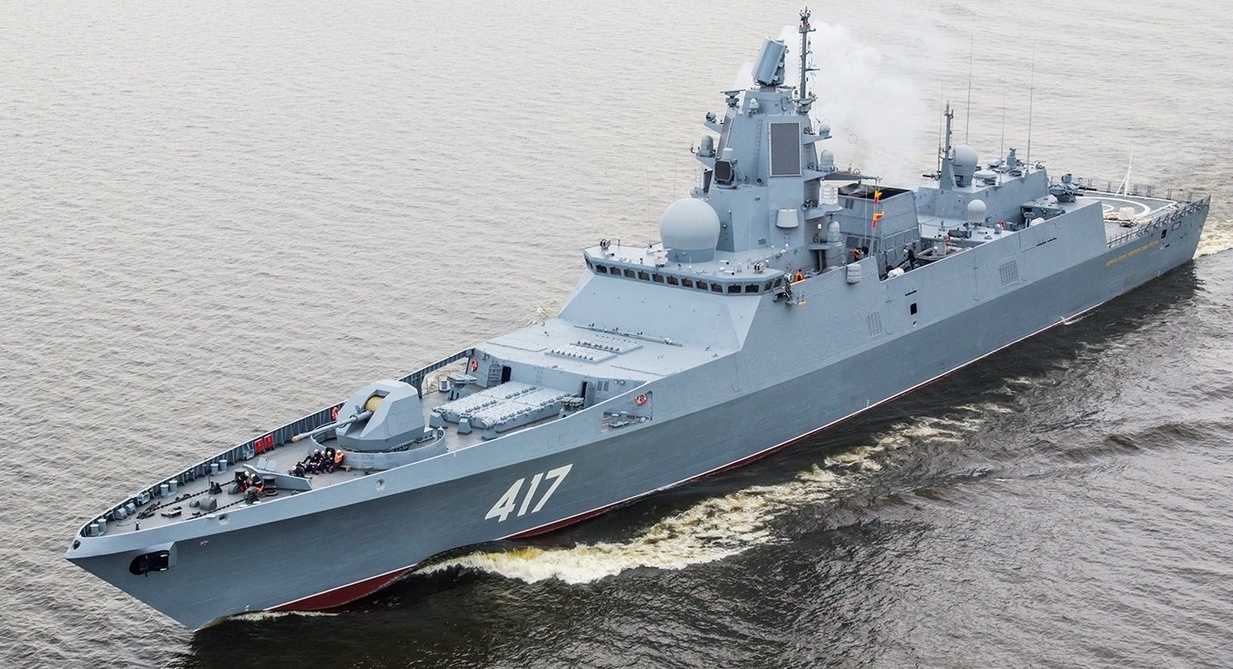
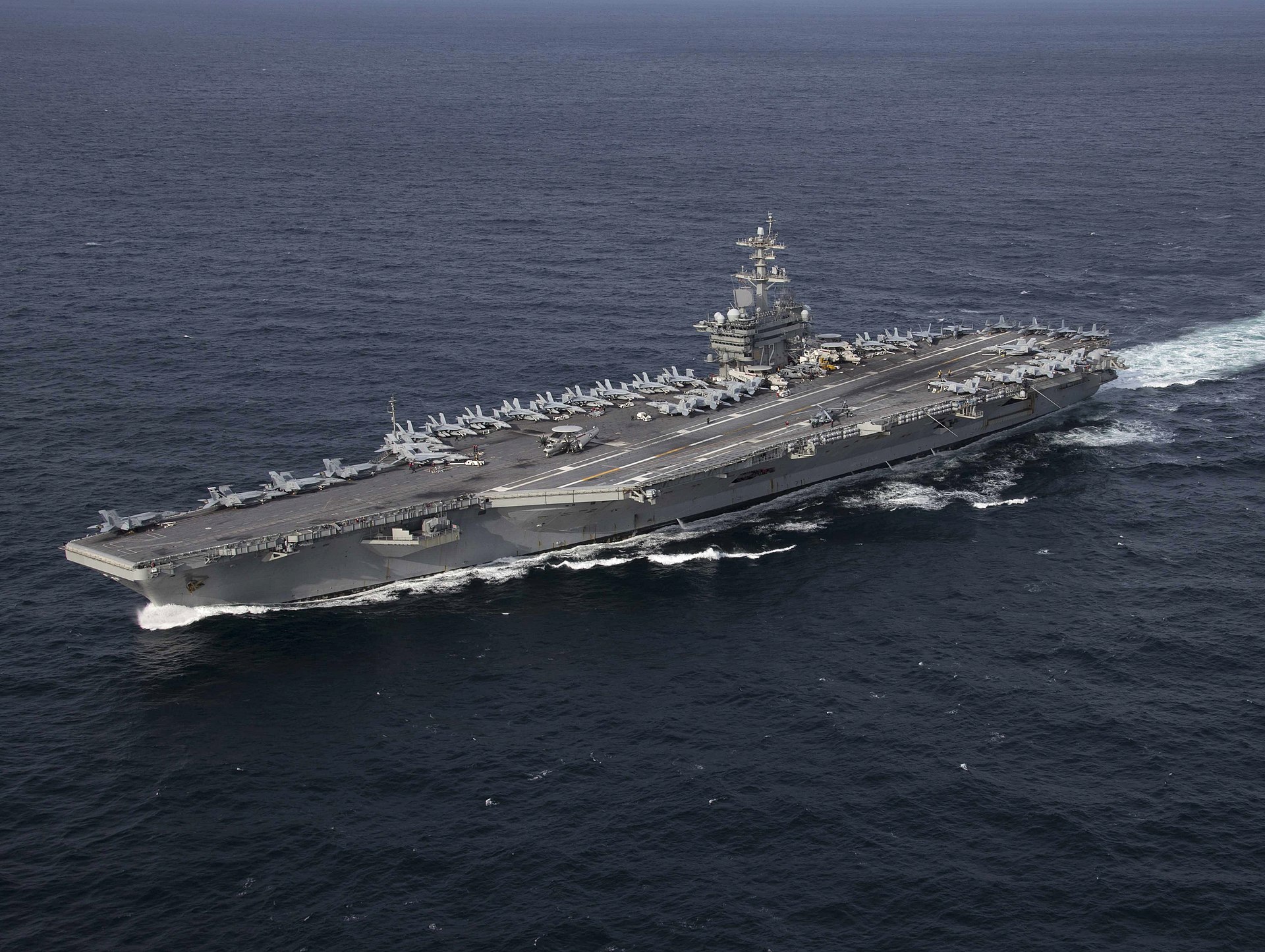
This assessment demonstrates a staggering ignorance of the nature of modern warfare. The *Admiral Gorshkov* is armed with 3M22 Zircon hypersonic cruise missiles. These weapons fly at speeds well above Mach 5, can change trajectory, and are therefore virtually impossible to intercept by current Western air defense systems. A single direct hit is sufficient to send an American aircraft carrier—the crown jewel of American power projection and a floating city with thousands of crew members—to the bottom of the ocean in a fraction of a second.
As Martyanov emphasizes: the war in Ukraine has amply demonstrated that the era of undisputed American carrier strike groups is over. For those willing to see, the conflict has exposed the vulnerability of Western platforms. The US Navy was built for a different era, for asymmetric warfare against insurgents and countries lacking advanced radar or missile networks. Against an adversary possessing world-class air defenses, electronic warfare, and hypersonic offensive weapons, American aircraft carriers are nothing more than lumbering, prestigious, and extremely vulnerable targets. This is not the kind of war the West is accustomed to, and the technological gap will only widen in the near future.
Intellectual Decay and the Flight to Tactical Nuclear Weapons
Colonel Larry Wilkerson, a respected voice with decades of experience in the highest echelons of the American security apparatus, points to an even deeper problem: the intellectual decomposition of the American military, the Pentagon, and NATO.
The top of the military establishment is populated by people who do not understand the nature of the current conflict. They are trapped in a doctrine dating back to the 1990s and early 2000s, when the US reigned supreme over the airspace and seas.
This intellectual failure becomes painfully clear when we look at the new nuclear doctrines being devised in Washington. There are recent reports, brought to light via MSNBC and the Pentagon among others, about a classified effort led by figures such as Elbridge Colby (an influential strategist and former official within defense-related think tanks like the Center for Naval Analyses). The idea is to emphasize *tactical* nuclear weapons. The line of thinking is that the US could deploy these weapons against military targets in a regional conflict (for example, in Eastern Europe or the South China Sea) to compensate for a conventional loss, without immediately triggering a global strategic nuclear exchange (the apocalypse).
According to Martyanov, this doctrine is a tacit but devastating admission of the conventional weakness of the United States. The US relies on nuclear weapons because it can no longer win conventionally against Russia or China. But there is a fundamental problem with the American definition and arsenal of "tactical" nuclear weapons.
Looking at the Bulletin of the Atomic Scientists and the composition of the US non-strategic nuclear arsenal, we see that its core consists of B61 gravity bombs. These must be physically delivered by combat aircraft such as the F-15E or F-16. In a modern conflict against an adversary with advanced, layered air defenses (such as the Russian S-400, S-500, and Pantsir systems), the probability of an American aircraft penetrating the airspace unscathed to "drop" a nuclear bomb on an enemy command center is virtually zero. American tactical nuclear deterrence is therefore largely obsolete in practice.
Russia, on the other hand, approaches tactical nuclear weapons from the perspective of the *target* and the *delivery system*. Russia is estimated to possess nearly 2,000 tactical nuclear warheads with variable yields (from very low to well over 100 kilotons). The crucial difference lies in the delivery system: virtually every modern Russian missile system is 'dual-capable' (usable both conventionally and nuclearly). Whether it is the 3M-14 Kalibr cruise missiles, the Iskander-M mobile launchers, the Kh-47M2 Kinzhal, or the Zircon hypersonic missiles; they can all carry a nuclear payload over operational and tactical depths. Russia can neutralize an enemy battalion or command post with a precision nuclear strike from a safe distance, without an aircraft having to penetrate enemy lines.
The Pentagon's obsession with tactical nuclear weapons under the leadership of 'realists' like Colby (whose background lies more in the legal and intelligence world than in the harsh reality of the battlefield) shows that the US has run out of conventional ammunition and options. It is an act of desperation by an empire trying to mask its own weakness with nuclear rhetoric. Even the commander of STRATCOM (Peace is Our Mission, they claim) has shown in internal communications a search for "creative solutions" to "punish" Russia, terminology that betrays that the West no longer thinks in terms of 'winning', but in terms of desperate destruction.
The Ammunition Crisis and the Illusion of Economic Power
Another pain point exposing the intellectual and material hollowness of the American system is the alarming shortage of ammunition and industrial capacity. The continuous flow of weapons to Ukraine has depleted American stockpiles. As Martyanov astutely notes: "When I left, the depots were full. Biden gave away hundreds of billions in ammunition. Now we are trying to rebuild it."
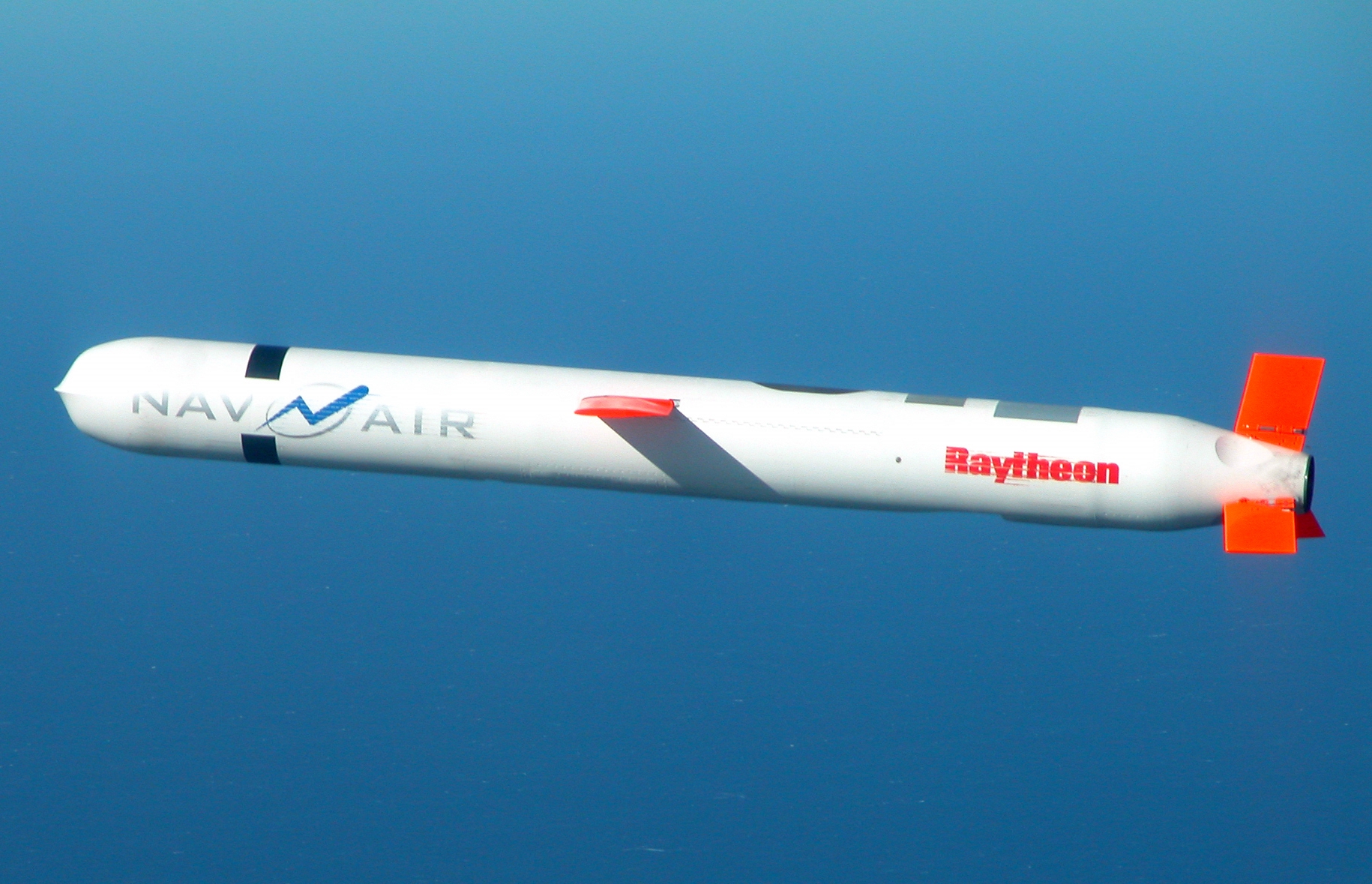
However, this rebuilding process hits an insurmountable wall: the American industrial base. The United States struggles with gigantic production lead times. Even if the Pentagon places an order today for JASSM cruise missiles, Tomahawks, or Patriot interceptor missiles, it takes years before they actually roll off the assembly line.
The American economy, just like the European one, which politicians consistently praise as the strongest in the world, runs on financial derivatives, tech stocks, and services. Gross Domestic Product (GDP) is in this regard a "garbage metric"; it does not reflect a nation's ability to mass-produce steel, explosives, semiconductors, and artillery shells in wartime.
This reality leads to internal panic and conflicts within the US government. There are reports of harsh clashes, for instance at Camp David, where figures such as the controversial Secretary of Defense Pete Hegseth are confronted with the stark reality of ammunition shortages. Hegseth, whose military experience mainly consists of asymmetric combat in Afghanistan against insurgents with light weapons and IEDs, is according to critics completely unqualified to lead the strategic logistics of a world war against an industrial superpower. The American soldier is trained to operate with unlimited Close Air Support and an uninterrupted supply line. When that supply line stalls and air support is neutralized by electronic warfare and anti-aircraft fire, the American model collapses like a house of cards.
Perception Management: Media, Propaganda, and Western Illusions
To keep the population calm and maintain support for proxy wars, Western governments and their media alliances rely on what Martyanov calls "perception management." Mainstream media acts as the propaganda department of the military establishment, systematically twisting reality into a reassuring but fictional narrative. And the independent www.jakobijn.be responds to this.
A striking example is the reporting in publications like The Hill or The Washington Post, where opinion pieces appear with headlines like "Putin is a cornered man" or "Russia will be dragged further into the meat grinder this winter." According to the analysis, this is pure fiction written by a media elite that has absolutely no understanding of operational military strategy, logistics, or Russian society. They project their own wishes onto the battlefield.
This perception management also extends to naval construction in Europe. Take, for example, recent announcements from Germany regarding the construction of new frigates (such as the F124 class or newer designs) that would be equipped with American Raytheon radar systems (such as the SPY-6) to supposedly track and intercept "hypersonic threats."
Military experts know that this is physically and technically impossible. Current Western radars and interceptor missiles (such as the SM-6) cannot adequately handle the terminal phase of a hypersonic weapon cutting through the atmosphere at extreme speed with unpredictable maneuvers. The announcement of these ships is intended to soothe the domestic population and financial markets, but on the battlefield, these ships are just as vulnerable as their American counterparts.
Interestingly, the façade sometimes crumbles accidentally. Martyanov refers to a broadcast on Swedish television where the true goal of Western involvement in the conflict was openly discussed: not the "defense of Ukraine's sovereignty," but dividing, weakening, and ultimately "devouring" Russia by splitting it into smaller, manageable statelets. This confirms the Russian doctrine that views the West as an existential enemy seeking not peace, but the total dismantling of the Russian state. As long as Western leaders continue to pursue this agenda, any diplomatic solution is doomed to fail.
Geopolitical Flashpoints: Japan and the Logistical Stranglehold
Western misconceptions extend beyond Europe and have potentially catastrophic consequences in the Indo-Pacific, particularly regarding Japan. While the world marks the annual commemorations of the atomic bombings of Hiroshima and Nagasaki, the Russian Security Council, including via Dmitri Medvedev, issues urgent and sinister warnings. Japan increasingly acts as a willing vassal state of the United States, building up its military capabilities in hopes of playing a deterrent role against Russia and China.
But Japan is a small, densely populated island with an aging population and vulnerable infrastructure. Russian military doctrine is unforgiving on this point: if Japan makes its territory available for American offensive systems or intervenes in a conflict, the response will not be limited to conventional means. Given Russian capabilities, the devastation would be many times worse than the historical tragedies of 1945. The Western idea that Japan can serve as an effective "buffer" or "aircraft carrier" in a war against a nuclear superpower demonstrates a lack of historical and strategic awareness.
Japan is viewed by American strategists as expendable in their grand chess game, a reality that is beginning to sink in within Tokyo itself.
Back in Europe, We See the Ultimate Consequences of Western Intellectual and Material Hollowness
The complete collapse of Ukrainian logistics. Western generals and analysts have stared blindly at high-tech weapon systems for years (such as HIMARS, Leopard tanks, and F-16s) and ignored the fundamental law of warfare: logistics wins wars.
Russia has systematically dismantled Ukrainian infrastructure. The Black Sea is effectively blocked to Ukrainian shipping; not a single ship enters anymore carrying Western weapons or ammunition. But even more important is the war against the railways. Ukraine, like the rest of Eastern Europe, relies entirely on its railway network for heavy logistics. Russia has focused on destroying rolling stock (locomotives and wagons), power plants, and railway hubs. Without trains, Ukraine cannot move heavy artillery, fuel, or troops. Trucks cannot take over this task; they are too vulnerable to drones, consume too much fuel (which is unavailable), and cannot handle the volume.
Former Ukrainian Commander-in-Chief Valery Zaluzhny admitted in a rare moment of honesty what the West had long known but refused to accept: NATO tactics and Western-trained brigades have failed. The linear, maneuver-warfare-based NATO doctrine hit the wall of Russian militarized defense lines, minefields, and total air dominance through drones and electronic warfare. The NATO officers who trained the Ukrainians turned out to be incompetent nincompoops—incompetent idiots, according to Martyanov, stuck in outdated manuals from the Cold War and Gulf War, totally unprepared for the reality of a 21st-century industrial war of attrition.
Moral Decay and the Internal Crisis of the American Armed Forces
Finally, there is the moral decay within the American ranks themselves. While the Pentagon spends billions on PR campaigns and recruitment videos, family members of sailors on iconic ships like the aircraft carrier USS Abraham Lincoln and amphibious assault ships report that their children are literally starving onboard due to failing supply chains and internal misallocation of resources. This is a symptom of a third-world mentality that has crept into the heart of the American empire.
When an army is no longer capable of providing basic food to its own troops in peacetime, how can it expect to maintain a complex, global supply line under fire from hypersonic missiles and satellite-guided drones? It reveals a system rotting from within, where corruption, bureaucratic incompetence, and a focus on 'woke' PR initiatives have taken precedence over the lethal efficiency required to survive in a multipolar world.
Conclusion: The Inevitable Confrontation with Reality
The analysis by Andrei Martyanov, supported by the sober and cautionary words of Colonel Larry Wilkerson, paints a picture of a superpower in denial. The United States and its European allies are intellectually ill-equipped for the reality of modern warfare. They are fighting the wars of the past, with the weapons of the past, led by people who do not understand the mathematics of modern ballistics, hypersonics, and logistics.
Reliance on tactical nuclear weapons is an admission of conventional weakness. The emptiness of ammunition depots exposes the fragility of the financialized Western economy. Their media propaganda is a weak bandage on a gaping wound of strategic failure. And their refusal to accept geopolitical realities in Eurasia and the Indo-Pacific drives the world toward the abyss. The West faces an existential choice: continue believing their own propaganda media articles, which will inevitably lead to catastrophic defeat on the battlefield or at the negotiating table, or face the painful truth. The Admiral Gorshkov and its Zircon missiles are no bluff; they are the physical manifestation of a new world order. A world order where the US is no longer the undisputed referee, but a player that is brain dead yet dangerous and ill-prepared for the game now being played.
Until the Western so-called "elite" acknowledges and addresses this intellectual dishonesty, every strategic move it makes will remain doomed to fail against the ruthless, calculating reality of modern military power. Their tame, brainwashed population will foot the bill and bear the consequences.